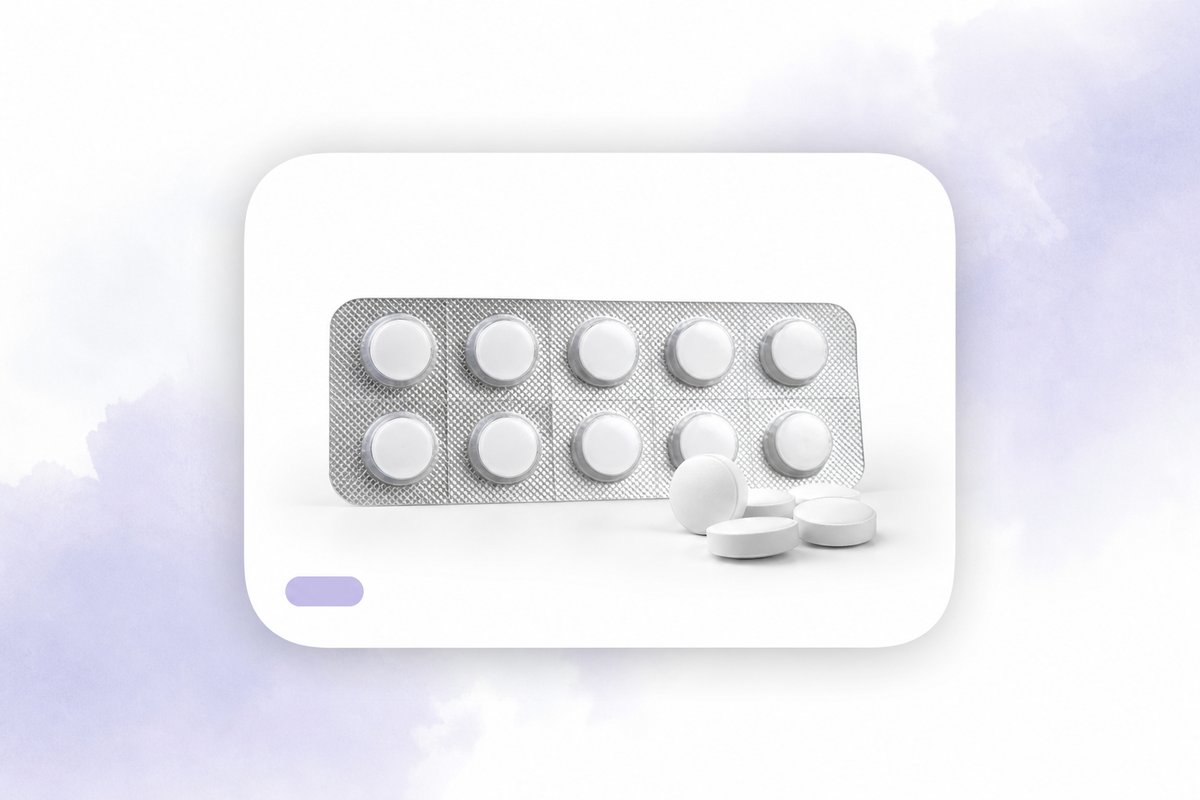
01Two 750 mg tablets start the short course
Opening move on this bin: name the 750 mg tablet, write two QID, and write when the course ends.
Pick 750 mg as the Kaelis lock because the adult start is two tablets four times daily. That is 6 grams on day one. The 500 mg board uses three tablets to reach the same gram total and lives on a different line.
Check the indication before anyone treats this as a sleep tablet. US labeling lists methocarbamol as an adjunct to rest, physical therapy, and other measures for acute, painful musculoskeletal conditions. The mode of action is not clearly identified. Direct relaxation of tense skeletal muscle in humans is not claimed.
Tag the first 48 to 72 hours as the high-gram window. Six grams a day is the usual recommendation for that stretch. Severe conditions may use 8 grams a day. Thereafter the label usually drops the total toward about 4 grams a day.
Bin a refill that arrives with no stop date and no physio plan. A short spasm course is the whole point of this card. Priya Natarajan files that as a Dublin habit, not a brand preference. Mail questions to [email protected].
Robaxin is the brand many Irish charts still say aloud. Generic 750 mg film-coated tablets carry the same milligram lock. Color and imprint vary by maker. Strength and the QID start do not.
Chemical name on the tablet insert is 3-(2-methoxyphenoxy)-1,2-propanediol 1-carbamate. Formula C11H15NO5. Molecular weight 241.24. It is a carbamate cousin of guaifenesin, which explains old 'expectorant family' hallway talk that does not change the spasm indication.
02When week two still asks for more 750s
Week two without a written stop is a Check step, not a silent repeat. Re-examine for radiculopathy, inflammatory disease, or a job that never let the muscle rest.
NSAIDs, heat, and a physio slot often do more for an acute strain than a second week of QID sedation. That is a clinical judgment, not a price argument.
People compare cyclobenzaprine in the same shopping tab. Different molecule, different sedation clock, different label. Do not swap boxes because a neighbour had a 'stronger' tablet.
Travel tins of unmarked 750 mg tablets fail the Check step. Imprint and strength have to match the script. Heat-softened blisters from a glove box are not a plan.
A household that shares leftover 750s after a weekend of lifting is running an unprescribed stack. Sedation plus someone else's alcohol or opioid is how overdose write-ups start. Bin the leftover blister or return it; do not gift it.
Short-course clock on the 750 mg lock
Write two 750 mg tablets QID and a stop date.
Labeled high-gram window; 6 g usual, 8 g if severe.
Many courses drop toward ~4 g/day, then off.
Re-examine cause. Do not bin a third box on autopilot.
03Screen colors that are not a new kidney story
Methocarbamol can interfere with certain 5-HIAA screens that use nitrosonaphthol reagent. It can also interfere with urinary VMA screens that use the Gitlow method. Tell the lab the tablet is on board before anyone chases a false lead.
Carcinogenesis, mutagenesis, and fertility studies are not on the tablet label. Absence of those studies is not a green light for months of unsupervised use.
Patient leaflets sometimes mention darker urine on methocarbamol. The US tablet label we used lists the 5-HIAA and VMA color interference, not a kidney-injury claim. Still report pain, fever, or a sudden drop in output.
Long-term daily 750 mg without a stop date is how this bin fails. The spasm role clip is the one-page reminder that physio and a cause work-up beat a third box.
Bradycardia on a pulse check after the midday pair is a labeled cardiovascular event, not a 'relaxed athlete' badge. Write the number down. If syncope joined it, the evening pair waits for a clinician, not a neighbour's opinion.
04What cirrhosis does to a 1-2 hour half-life
Healthy volunteers clear methocarbamol between 0.20 and 0.80 L/h/kg. Mean elimination half-life sits between 1 and 2 hours. Plasma protein binding is 46% to 50%.
Elderly healthy volunteers (mean age 69) ran 1.5 hours versus 1.1 hours in a younger group. Bound fraction fell a little (41% to 43% versus 46% to 50%). That is a nudge, not a license to ignore sedation in older Dublin patients.
Eight people on maintenance hemodialysis cleared about 40% less than seventeen normal subjects. Half-lives stayed similar: 1.2 versus 1.1 hours. Dose talk still needs the prescriber; the number just says clearance is not normal.
Cirrhosis secondary to alcohol abuse cut mean total clearance by about 70% in eight patients versus matched controls. Half-life stretched to 3.38 hours versus 1.11 hours. Protein binding eased to about 40% to 45%. That is the row that should scare anyone stacking wine with a 750 mg QID start.
Metabolism runs through dealkylation and hydroxylation, with conjugation likely. Essentially all metabolites leave in urine. Small amounts of unchanged drug leave in urine too. Food is not a labeled lock for the tablet.
White powder, sparingly soluble in water and chloroform, soluble in alcohol with heat and in propylene glycol, insoluble in benzene and n-hexane: that is the insert chemistry. None of it lets a community chemist compound a faster onset than the oral tablet already gives.
| Absorption | Oral tablet; no meal lock on US labeling. |
|---|---|
| Distribution | Protein binding 46-50% in healthy adults; a little lower in elderly and cirrhosis. |
| Metabolism | Dealkylation and hydroxylation; conjugation likely. |
| Excretion | Metabolites in urine; t1/2 1-2 h healthy, ~3.4 h in the cirrhosis study. |
05Pregnancy reports sit ahead of any refill
Safe use has not been established for fetal development. Reports of fetal and congenital abnormalities after in utero exposure exist. The tablet should not be used in women who are or may become pregnant, particularly in early pregnancy, unless the clinician judges benefit above hazard.
Animal reproduction studies have not been conducted. Whether the drug causes fetal harm or changes reproductive capacity is not known from those studies. Give it in pregnancy only if clearly needed.
Dog milk carries methocarbamol and/or metabolites. Human milk excretion is unknown. Caution applies when a nursing woman is offered a 750 mg course.
Leukopenia is listed. Fever with sore throat on a relaxant is not 'a virus from lying on the sofa.' Report it.
Hypersensitivity to methocarbamol or any tablet component is the only listed contraindication. That still includes dye or coating allergies. Read the specific generic leaflet when the maker changes at the chemist.
06How 750 mg tablets add to six grams
Adults on 750 mg start at two tablets four times daily. Maintenance is one tablet every four hours, or two tablets three times daily. Both maintenance paths land near the 4 gram day the label names after the first 48 to 72 hours.
Five-hundred milligram tablets use a different count: three QID to start, then two QID to maintain. People who split a 750 mg tablet to 'go gentle' are inventing a regimen the label does not write. Ask the prescriber for a written lower plan instead of kitchen arithmetic.
Eight grams a day is the severe-condition ceiling in the first stretch, not a quiet outpatient habit. That load is eight 750 mg tablets beyond the usual six. Sedation and stacking risk climb with the gram count.
Safety and effectiveness below age 16 have not been established on the tablet label. Pediatric improvisation is off this bin.
Injectable methocarbamol exists in hospitals. Polyethylene glycol in some injections changes the renal story. This card bins the oral 750 mg tablet only.
People sometimes ask for a 'loading Saturday' of extra 750s before a match. The labeled severe ceiling is already 8 grams in the first 48 to 72 hours. Beyond that you are inventing a sports protocol. Write the gram total on the box so two household members do not double the QID start.
| Board | Adult start | Adult maintain |
|---|---|---|
| 750 mg tablet (Kaelis lock) | 2 tablets QID (6 g/day) | 1 q4h or 2 TID (~4 g/day) |
| 500 mg tablet (other board) | 3 tablets QID (6 g/day) | 2 tablets QID |
| First 48-72 h | 6 g usual; 8 g if severe | Then usually ~4 g/day |
07Driving, wine, and night opioids on one MAR
Combined effects with alcohol and other CNS depressants are a labeled caution. That includes opioids, benzodiazepines, Z-drugs, and many sedating antihistamines. The stack is how warehouse falls and shallow breathing get written up.
Methocarbamol may inhibit pyridostigmine. Use caution in myasthenia gravis when an anticholinesterase is already on the chart. Weakness that worsens after a relaxant start is a same-day call, not a 'give it a week' note.
Commercial driving and forklifts need an occupational hold while sedating doses are active. A valid script is not a fitness certificate. The sedation clip is the short handout for that conversation.
Hypotension, bradycardia, flushing, and syncope sit in the cardiovascular list. Standing slowly on day one is not folklore. Thrombophlebitis is listed as well.
Jaundice, including cholestatic jaundice, appears in the digestive list. New yellow eyes or dark tea-colored urine with pain is not a 'relaxant color' story. That is a clinician visit.
Conjunctivitis, nasal congestion, pruritus, and urticaria sit in the skin and special-senses list. A new widespread rash on day two is a stop. Keep the blister for the visit so imprint and maker are not a memory test.
Stacks to tag before the first 750 mg pair
- Alcohol - additive CNS depression
- Opioids - sedation and respiratory risk
- Benzodiazepines and Z-drugs - deeper nights, worse mornings
- Pyridostigmine in myasthenia - possible weaker response
08Sedation arrives before the back feels looser
Drowsiness, dizziness, and lightheadedness sit in the labeled nervous-system list. So do confusion, diplopia, nystagmus, and mild incoordination. People feel the CNS depressant before they feel any 'open' in the muscle.
Driving and machinery stay tagged until the person is reasonably certain the tablet does not impair those tasks. That is label language, not a Dublin extra. First-dose Friday nights exist so Monday buses are not the experiment.
Headache, nausea, metallic taste, blurred vision, and rash also appear in the coincident list. Anaphylaxis and angioneurotic edema are listed. New facial swelling or wheeze stops the course the same hour.
Seizures, including grand mal, are reported. Overdose stories often include alcohol or other CNS depressants. Deaths have been reported with methocarbamol alone and with stacked depressants. Supportive care is the overdose plan. Hemodialysis usefulness in overdose is unknown.
Amnesia, insomnia, and vertigo sit beside the more famous drowsiness line. A person who sleeps ten hours and still cannot name the day needs a stop and a clinic call, not a second morning pair of 750s.
09Rest and physio stay on the same script line
Adjunct means the tablet sits beside rest and physiotherapy, not in place of them. Mayo and other living patient pages keep repeating that sentence because people treat a muscle relaxant as the whole plan.
Acute lumbar strain, a short post-procedure flare, or a few nights of sleep wrecked by spasm are the usual fits. Months of daily 750 mg without a cause work-up is a failed bin, not a maintenance success.
Neuropathic burning in the feet belongs on the pregabalin 75 mg card, not on this spasm peg. Mixing both without a written reason stacks sedation for no extra spasm logic.
Saddle numbness, new foot drop, or lost bladder control bypasses any relaxant conversation. Those signs need urgent assessment, not another two-tablet QID box.
Rheumatoid arthritis and cerebral palsy are not the labeled oral uses on this card. Limited historical mentions do not turn 750 mg QID into a disease-modifying plan. Keep the bin on acute musculoskeletal discomfort plus rest.
10Bin the short spasm course
Stock counsel when the 750 mg start is written as two QID, rest and physio are on the same line, and driving is tagged for the first days.
Cirrhosis, myasthenia with pyridostigmine, early pregnancy, and any opioid or alcohol stack change the Check step before the first pair of tablets.
Change dose or length only with the clinician who holds the rest of the chart. Educational bin only. Kaelis does not dispense.
Dublin stamp on this spasm card is 21 August 2026, Priya Natarajan. Method stays Pick, Check, Tag, Bin. Source mail stays [email protected].
Cash notes in the closing band are a US GoodRx board for 750 mg times thirty, not an Irish price list and not a shop that sells those tablets.
Generic methocarbamol 750 mg x 30, GoodRx tablet table, 2026 board.
Generic methocarbamol 750 mg, thirty tablets, the Kaelis short-spasm lock, August 2026. GoodRx lists 750 mg x 30 at $29.94 average retail and $2.00 with a coupon. The 500 mg board is a different line. Kaelis does not dispense.